Address
304 North Cardinal
St. Dorchester Center, MA 02124
Work Hours
Monday to Friday: 7AM - 7PM
Weekend: 10AM - 5PM
Address
304 North Cardinal
St. Dorchester Center, MA 02124
Work Hours
Monday to Friday: 7AM - 7PM
Weekend: 10AM - 5PM

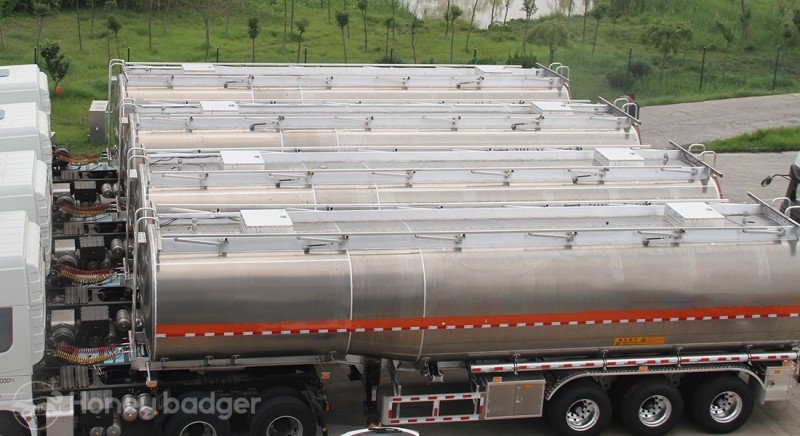
Fuel tanker semi trailers have an important role to play in the transport process, especially when loading fuel, where safety and efficiency are factors that must be given high priority. In order to ensure that the loading process runs smoothly and to avoid accidents, the following key aspects require special attention.
I. Pre-loading inspection.
Before loading the product, the fuel tanker semi trailer must be thoroughly inspected. Firstly, check that the tank is not damaged, deformed, or leaking. Any small cracks or holes can lead to oil leakage and cause a hazard. Next, check that the tanker’s valves, pipes and joints are intact to ensure they are well sealed. At the same time, it is necessary to check that the braking system, tires, lights, emergency equipment, and other components of the tanker are normal to ensure safe driving during the transport process.
2. Choose a suitable place to load.
The loading area should be well ventilated and away from fire and flammable materials. Avoid loading in densely populated areas, schools, hospitals, and other areas. At the same time, the ground at the loading site should be flat, firm, and able to support the weight of the tank semitrailer to prevent the vehicle from tipping or sinking.
3. Strictly follow the operating procedures.
Operating procedures should be strictly followed during loading. Operators should wear good protective equipment such as anti-static clothing, helmets, gloves, etc. When opening the valves and pipes of the oil tank semitrailer, work slowly to avoid static sparks. At the same time, the flow rate of the oil should be controlled and not too fast to prevent the generation of static electricity accumulation and impact. During loading, pay close attention to the liquid level and pressure changes in the tank semi-trailer, if abnormalities are detected, loading should be stopped immediately and appropriate measures taken.
4. Preventing the build-up of static electricity.
Static electricity is one of the biggest potential hazards when loading fuel into a fuel tanker semi-trailer. Effective measures must be taken during the loading process to prevent the accumulation of static electricity. Before loading fuel, ensure that the road tanker and the ground are well earthed. At the same time, try to avoid the use of plastic and other tools and equipment that can easily generate static electricity, and use metal tools.
5. Ensure that the loading capacity is adequate.
Tanker semitrailers should be moderately loaded, not overloaded or underloaded. Overloading will increase the load on the trailer, which will affect driving safety, but will also easily lead to tank rupture or leakage. Underloading wastes transport resources and increases transport costs. When loading oil, accurately calculate the loading capacity according to the rated capacity of the tank semitrailer and the density of the oil, and strictly control within the safety range.
6. Post-loading inspection
After loading, the tanker should be checked again. Check that the valves, pipes, and joints are tightly closed to prevent oil leakage. At the same time, check that the fluid level and pressure in the tanker are normal to ensure that the trailer is in a safe condition. Before driving, the braking system, tires, lights, and other components of the trailer should also be checked to ensure that the trailer can be driven safely.
There are many links in the tanker loading process, each of which requires the operator to strictly follow the instructions to ensure that the fuel is loaded into the tanker safely and efficiently. Only by paying full attention to the various aspects can we effectively avoid the various risks that can arise during the loading process and ensure the smooth running of the fuel transport.
This will close in 20 seconds
This will close in 20 seconds


